Every sport has its transformative figures — athletes whose presence on the field, court, or ice changes not just the game they're playing, but the very understanding of what the sport can be. In the NBA, this list is long and storied, stretching back to the league's founding years and continuing right through to the present era. But a handful of players stand apart, not merely for their achievements but for the lasting shifts they created in how basketball is played, coached, and appreciated by fans worldwide.
Bill Russell: Winning as a Philosophy
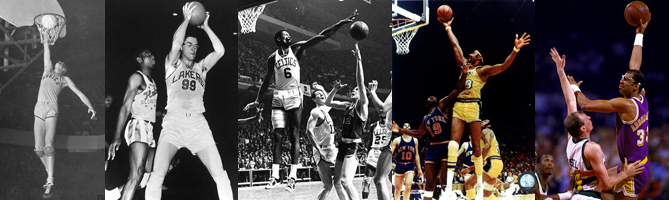
It would be impossible to talk about NBA legends without beginning with Bill Russell. The Boston Celtics center won eleven championships in thirteen seasons — a record that will almost certainly never be approached. But the raw championship count doesn't fully capture Russell's significance. He was the architect of a defensive philosophy that simply hadn't existed before him at the professional level.
Russell was not the highest scorer on his teams. He understood that his role was to control the interior, to read offensive plays before they developed, and to use his combination of timing, intelligence, and physicality to disrupt what other teams had spent their entire preparation trying to execute. He turned defensive play into an art form that his era wasn't fully equipped to measure or appreciate, because the statistical tools didn't yet exist to capture it.
His relationship with Red Auerbach created one of the most successful coaching partnerships in professional sports history, built on mutual trust and the understanding that winning required more than scoring. What Russell accomplished in Boston established a template for team basketball that coaches still reference today.
Wilt Chamberlain: The Benchmark of Individual Dominance
If Russell represents the triumph of team over individual, Wilt Chamberlain is the defining expression of individual athletic dominance in NBA history. The statistics Chamberlain produced during his career remain so far outside normal ranges that they still seem implausible. A hundred points in a single game. Fifty-point scoring averages across a full season. More than 23,000 career rebounds. Chamberlain was operating at a level that the league simply wasn't prepared to contain.
What makes Chamberlain so significant to the sport's history is not just what he did, but how the NBA responded to him. Rules were changed, offensive strategies were restructured, and teams built their entire defensive philosophies around slowing one man. That kind of influence on the structure of professional basketball itself is perhaps the truest measure of a player's lasting impact.
"Nobody roots for Goliath," Chamberlain once said — a comment that captured both the loneliness of his dominance and the way sports fans tend to root for the underdog against the unstoppable force.
Magic Johnson and Larry Bird: Saving the League
By the late 1970s, the NBA was in a genuine crisis. Television ratings were declining, the Finals were being broadcast on tape delay, and the league struggled with a public perception problem that it took years to fully understand and address. The arrival of Magic Johnson and Larry Bird in 1979 changed that trajectory in a way that's difficult to overstate.
Their rivalry, which had begun in the 1979 NCAA Championship game between Michigan State and Indiana State, instantly gave the NBA a narrative engine. Magic was Los Angeles — fast, flashy, connected to Hollywood celebrity culture. Bird was Boston — gritty, deliberate, intensely competitive. They were opposites in almost every stylistic sense, and yet they elevated each other throughout their careers in a way that made the entire league better.
Magic's no-look passes and his capacity to play every position on the floor redefined what was possible from a point guard. Bird's shooting, his court vision, and his almost supernatural ability to deliver in pressure moments made him one of the most formidable players the game had seen. Together, they pulled the NBA out of its late-70s doldrums and set the stage for everything that followed.
Michael Jordan: The Global Standard
Michael Jordan's impact on professional basketball is so well documented that writing about it risks feeling repetitive. But his significance cannot be understated. Six NBA championships, six Finals MVP awards, five regular season MVP awards, and a career scoring average of 30.1 points per game — the numbers tell one story. The broader cultural impact tells another.
Jordan took the foundation that Bird and Magic had laid and built something entirely new on top of it. Where they saved the league domestically, Jordan made the NBA genuinely global. The 1992 Dream Team — the first U.S. Olympic squad to feature active NBA players — brought Jordan, Magic, Bird, Patrick Ewing, Charles Barkley, and others to Barcelona, and the result was a worldwide broadcast event that introduced basketball to audiences who had barely encountered the sport.
His partnership with Nike produced the Air Jordan line, which transformed athletic footwear into a fashion and cultural phenomenon still operating at the highest levels today. Jordan understood that an athlete could be a brand in ways that went far beyond endorsement deals, and that realization changed how every athlete who followed him thought about their careers.
LeBron James: Longevity and Reinvention
The conversation about LeBron James is complicated precisely because it's still ongoing. He entered the league at eighteen years old in 2003 carrying expectations no rookie should have to bear, and he has spent his career methodically, sometimes painfully, meeting those expectations one chapter at a time.
What separates James from almost every player who preceded him is his capacity for reinvention. The explosive athlete who first arrived in Cleveland evolved into a more deliberate, physically dominant force in Miami, then transformed again in his second Cleveland stint into something resembling a point guard operating in a power forward's body. Each phase produced championships and reshaped debates about what the ideal basketball player looks like.
His playmaking — the ability to see the floor and create advantages for teammates — has always been his most underappreciated skill. While his scoring and athleticism drew headlines, it was his passing that most clearly demonstrated his basketball intelligence. Teams don't typically design their entire offensive system around a forward's vision, but James made that a completely rational approach.
Tim Duncan: The Quiet Dynasty
Tim Duncan spent nineteen seasons in San Antonio without ever playing for another franchise, and he won five championships. He was selected to fifteen All-Star games and won two MVP awards. Those are remarkable numbers for anyone, but they're especially striking when you consider that Duncan accomplished them all without ever generating the kind of individual celebrity or promotional visibility that surrounded most of the other players on this list.
Duncan was the foundational piece of one of the most consistent dynasties in professional sports history, alongside coach Gregg Popovich and point guard Tony Parker. The Spurs won championships in five different decades. Their system — built on ball movement, defensive discipline, and the exploitation of structural advantages — became a reference point for analytically minded coaches across the league.
Steph Curry: The Three-Point Revolution
No active player has changed the mathematics of basketball more fundamentally than Stephen Curry. His four NBA championships with the Golden State Warriors represent one measure of his impact. But the deeper transformation is visible in how every team in the league now prepares, practices, and structures its offense.
Curry's ability to shoot accurately from distances that were previously considered tactically irrelevant — thirty feet, beyond the logo — didn't just add a new weapon to his own arsenal. It forced defensive recalibrations across the entire league, opened driving lanes for his teammates, and sparked a generation of players who grew up trying to develop the same skills. The three-point rate across the NBA has climbed steadily since Curry became its most visible practitioner, and that shift in how the game is played is his most enduring contribution to the sport.
What Makes a Legend?
Looking across these careers, a pattern emerges. Each of these players didn't just excel within the existing structure of basketball — they pushed against the boundaries of what was thought possible and forced the game to accommodate new realities. Russell made defense a primary strategic consideration. Chamberlain forced structural rule changes. Magic and Bird saved and expanded the league's audience. Jordan globalized it. James redefined athletic longevity. Duncan built a dynasty through consistency. Curry changed the mathematics of how points are scored.
Basketball's history is a long conversation between what the sport was and what exceptional players kept revealing it could become. These legends are the people who drove that conversation forward, and understanding their careers is essential to understanding the game as it exists today.